
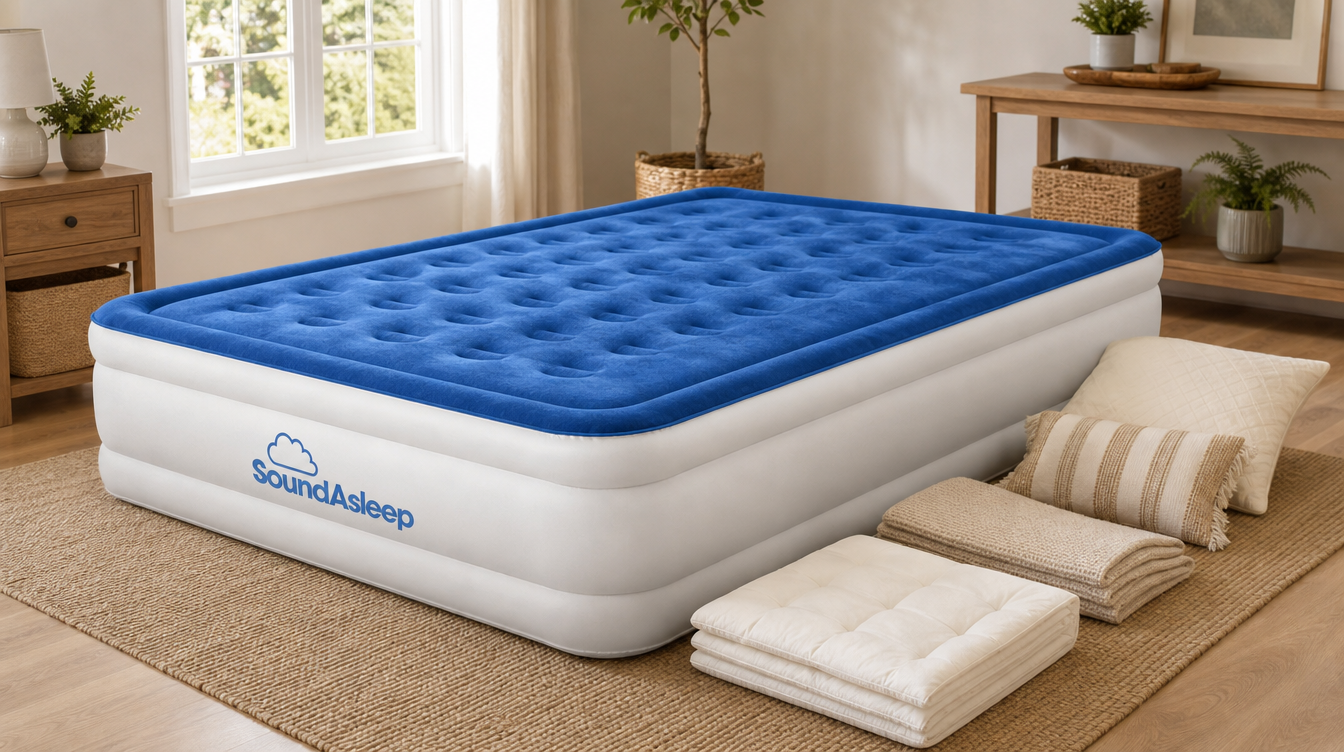
An air mattress can be much more comfortable when it is treated like a complete sleep setup, not just an inflated surface on the floor. The mattress matters, but the room, bedding, temperature, and firmness setting all shape how it feels. A few simple changes can make a guest mattress feel warmer, quieter, more supportive, and more inviting.
Place it where the room feels settled
Start with the room. Put the mattress where the floor is flat, the temperature is comfortable, and the sleeper has room to move around. Avoid squeezing it between furniture or placing it directly under a drafty vent. A mattress that fits the space well will feel more intentional and less like a last-minute compromise.
If the room has hard flooring, sweep before setup and consider placing a clean rug or mat underneath if it does not create uneven pressure. This can reduce floor noise and make the area feel warmer. Keep the pump side reachable so the sleeper or host can make a small firmness adjustment without stripping the bed.
Use bedding layers to soften the surface
A fitted sheet alone can make an air mattress feel cool and slick. Add a mattress pad, quilted cover, or thin topper between the mattress and the sheet. This layer helps regulate temperature, smooths the feel of the sleep surface, and makes the bed feel more familiar to someone used to a traditional mattress.
For guests, use bedding that matches the season. A breathable cotton sheet and light blanket work well in warm rooms. In cooler spaces, add a warmer blanket or comforter so the sleeper is not relying on the air mattress surface for warmth. Keep layers smooth and tucked enough that they do not bunch under the sleeper.
Tune firmness for the sleeper
Comfort is not always the firmest setting. Some sleepers want a firmer surface for back support, while others need a little more give at the shoulders and hips. Inflate the mattress until it feels supportive, then test it by lying down for a minute rather than pressing it with your hand.
If the middle dips too much, add air. If the surface feels hard or bouncy, release a small amount. Make small adjustments and retest. For longer guest stays, ask after the first night whether the mattress felt too firm or too soft. A quick top-off or small release can make the second night noticeably better.
Add better pillows
Pillows are easy to overlook, but they change the whole sleep posture. A comfortable air mattress can still feel off if the pillow is too flat, too tall, or mismatched to the sleeper. Offer two pillow options when possible: one softer and one more supportive.
Side sleepers often need more pillow height than back sleepers. If you do not know the guest's preference, place an extra pillow nearby rather than stacking everything on the bed. Small touches like this make the setup feel more like a real guest room and less like temporary bedding.
Reduce movement and noise
Air mattresses can make more sound when they sit directly on a hard floor or when bedding slides across the top. A rug, mat, or soft layer underneath can reduce movement noise. A mattress pad or topper can also cut down on the plastic-like surface sound that some sleepers notice.
Keep the mattress away from walls or furniture that it might rub against during the night. If two people are sharing the mattress, make sure it is properly inflated and sized for them. Enough air and enough room reduce rolling toward the center and help both sleepers feel more stable.
Start with the right mattress for the job
Bedding can improve comfort, but the mattress still sets the baseline. For guest rooms, the SoundAsleep Dream Series has ComfortCoil Technology and a built-in pump. The CloudNine Series adds dual smart pump technology.
For outdoor use, choose a mattress made for that setting rather than trying to make an indoor guest mattress do every job. The SoundAsleep Camping Series is built around outdoor-ready comfort with a rechargeable pump. Matching the mattress to the setting makes every comfort layer above it work better.
Explore SoundAsleep mattresses
Compare guest-ready raised comfort, smart pump support, and outdoor-ready options across the SoundAsleep lineup.
Frequently asked questions
Can you put a mattress topper on an air mattress?
Yes. A thin topper, quilted pad, or mattress protector can make the surface warmer and smoother. Avoid anything so heavy or stiff that it pulls at the edges or makes storage difficult.
How firm should an air mattress be?
It should feel supportive without being drum-tight. The sleeper should not sink heavily in the middle, but the surface should still have enough give to feel comfortable at the shoulders and hips.
How do I make an air mattress feel less cold?
Add a mattress pad or topper, use warmer bedding, and set the mattress away from drafts or cold floors. A soft layer between the mattress and sheet usually makes the biggest difference.